Building Understanding, Trust and Empathy with Active Listening

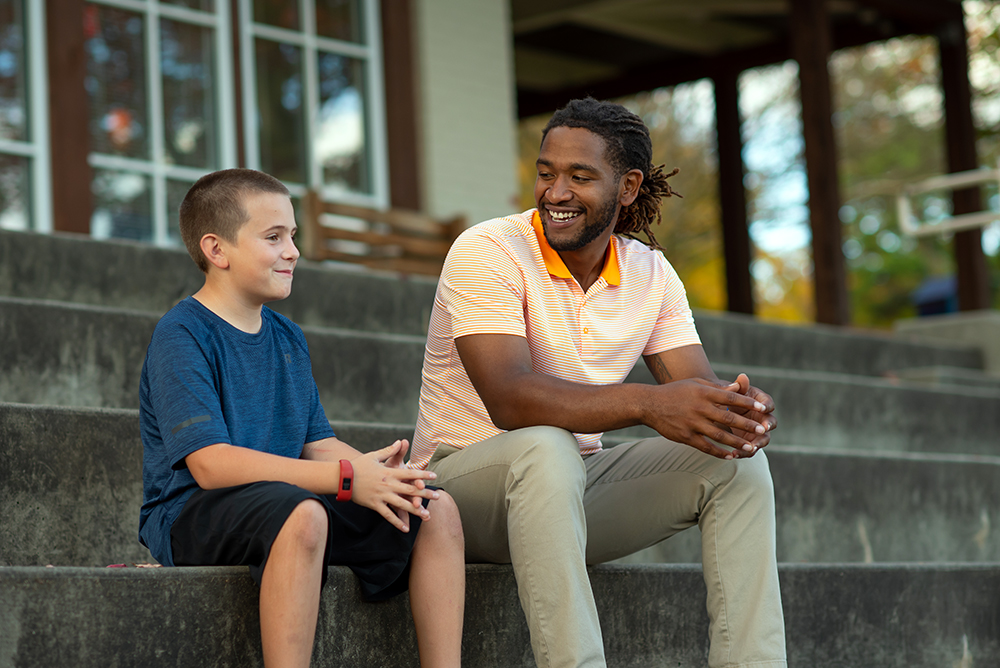
Every conversation can be an opportunity to learn something new, build trust with someone, and deepen connections. This happens when we build the skill of active listening and learn to treat listening as an active process – not a passive one. 

What is Active Listening?

Active listening is a way of listening and responding to another person that improves mutual understanding. It’s about being present, listening to understand (not respond), and showing active interest and engagement in the dialogue.  

Why does it matter? 

Active listening is an important skill for all of us to cultivate. Not only is it an important leadership skill, it has been shown to promote mindful thinking, can reduce anxiety and depression, helps build relationships and can promote empathy.  

How do we practice it?

At First Tee, we use a process called A-L-R to help build connection through active listening. This helps us to deepen conversations, keep them going, and get the most out of them. Here’s how A-L-R works:

  • Asking questions: Asking thoughtful questions is not only a way you can keep the conversation going, but it gives you a deeper understanding of the person or topic you are engaging with. 
    • Helpful Tip: Be curious. Try asking questions that dig a bit deeper: How did they feel in that moment? What was going on in their minds during that experience? What would they do differently the next time? These make the conversation richer, rather than closed-ended questions that are typically answered with a simple Yes or No.  
  • Listening to understand: When you ask a question, it is important to listen carefully to what the person is saying. We can sometimes be fixated on what we are going to say next, or when it’s our turn to jump back into the conversation, but try not to think about what you are going to say next.. Your focus is on them and their perspective rather than your own. 
    • Helpful Tip: Make an effort to try to clear your mind first of any distracting thoughts. It can help to jot down a mental or physical note of things on your mind in order to give your full attention. 
  • Reflect & respond to the reply: Keep the conversation going by responding in a way that connects with what they just said. You can try to restate in your own words what the person said, share what you think or feel about it, or ask another open-ended question that connects with what the person just said.
    • Helpful Tip: Show engagement and interest in what they are saying: look them in the eye when they are talking, use body language like nodding your head.


Active listening requires work, but you’ll be surprised at how much reward there is when you approach conversations and communication with this skill. Active listening is just one of the skills we are supporting kids and teens to build at First Tee. Click here to find out more about our programs.

Taking on Challenges

Taking on Challenges

Experiences can be some of our greatest teachers, and there are a variety of learning opportunities ahead for parents and students alike. While some will be fun and exciting, others may be challenging or difficult to navigate. Without practice or understanding, some of these new experiences are likely to leave students feeling overwhelmed and stressed. However, if you can help your student choose to see every experience as one that can build character, they’ll always come out better equipped for whatever comes next.

We believe in developing experiences that are just as fun as they are meaningful. As a result, our students are empowered by new challenges which result in continuous personal growth and essential character development.

Going back to school is the perfect opportunity to practice growing through challenges. To help parents and students navigate their back-to-school transition, we’ve developed a few tips to help them get ready.

  • Use STAR
    • S stands for STOP and take a deep breath.
    • T stands for THINK of all your choices.
    • A stands for ANTICIPATE what could happen (good or bad) as a result of your choice.
    • R stands for RESPOND by selecting the best choice for what to do.
  • Identify Challenges and Support
    • Ask your child to identify challenges for specific subjects and social interaction
    • Work with them to create a list of people they can lean on for support

Each of these steps can plant seeds of mindfulness as students go through everyday life. Taken directly from our First Tee programs, where we prepare kids to face new experiences by helping them to identify their support team, reflect on their opportunities, and strengthen what they bring to everything they do. We define strength of character as the self-confidence to show up to the challenge, the resilience to keep going when you fail, and the inner strength to do the right thing even when it’s the hard thing to do. It’s what will allow your child to walk away from failure determined, not defeated.

With our over 20 years of experience, we’ll continue developing experiences that build character to empower kids and teens through a lifetime of new challenges and continuous personal growth. This way your kids will never face a challenge they can’t go through or grow through. To learn more about getting your child involved with First Tee, you can find a chapter near you today!

6 Ways To Show Up For Others

We believe character is learned, cultivated, and shaped by our experiences. At First Tee,  we focus on taking the valuable lessons learned on the course, and applying them to everyday lives at school, at home, and in our communities. We believe that part of being a good leader and becoming a game-changer involves showing up for others whenever possible. Here are six ways that you can encourage your child to show up and help others: 
At Home

  • Encourage them to help with household chores. By taking on important tasks around the house, they can help  maintain a clean space for themselves while alleviating stress on the whole family. Handling household chores develops a sense of personal responsibility, time management, and can build leadership skills.
  • Have them dedicate time to helping their younger siblings with homework. By spending time teaching their siblings, they can strengthen their relationships with each other, and exceed in their classes. Teaching others often builds intelligence and increases confidence.

In The Community

  • Encourage your child to help individuals in the community. By helping vulnerable members of the community, your child can make a real difference in their lives. Additionally, helping others will help teach your child compassion and empathy, two qualities of good leaders.
  • Sign them up to volunteer for a local nonprofit with ties to the community or neighborhood. Volunteering is typically a social activity, which will help build connections with other locals that are likely to share similar interests and values. Volunteering locally will also provide a sense of personal satisfaction, and will make your child  feel more connected to their community.

At School 

  • Suggest tutoring a struggling classmate. Teaching others is oftentimes the best way to understand a topic yourself. By tutoring others, your child will have the opportunity to show compassion and build relationships, while also helping them to better understand the material and become more self confident.
  • Encourage your child to befriend anyone who may be new to the community or struggling socially. By befriending classmates who are having trouble making friends, your child can empower them and help build their confidence. This simple act of kindness can play a major role in making other students feel included and more engaged at school. 
These six suggestions are just the tip of the iceberg when it comes to the ways you can teach your child to show up for others. Our coaches and staff at First Tee encourage you to practice some of these suggestions, and come up with your own. We guide kids and teens to strengthen what’s inside  and put it into action. If you are interested in getting your child involved with First Tee, you can learn more and sign up today! 

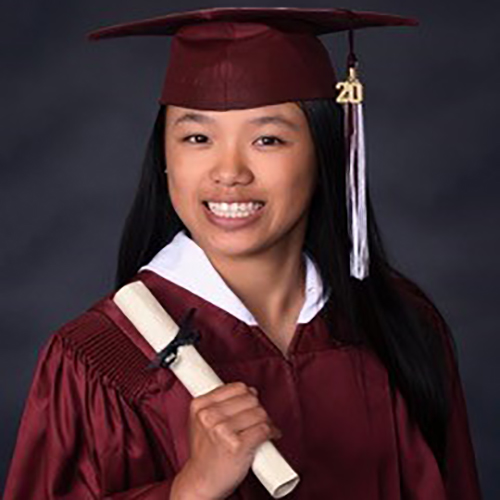
Quick 9: Denise W

Mentoring

Denise W, First Tee – San Francisco 

1. Why is mentorship important?

It’s easy to get lost and overwhelmed, especially since we now live in an extremely fast-paced world where expectations for us are very high, so having a mentor to guide us through our development process is definitely reassuring.

2. What makes someone a good mentor?

Listening and being able to communicate effectively are qualities that make someone a good mentor. With such qualities, a mentor will be able to offer constructive feedback which will aid in a mentee’s future development.

3. Who has been an impactful mentor to you?

My mom has definitely been the most impactful mentor for me.

4. What have you learned from her/him?

From my mom, I learned that no matter what the circumstances are, hard work pays off. My mom immigrated to the U.S. in hopes to find better future prospects for the family and despite not knowing any English, she still continued to work hard in the U.S. to achieve her goals. In the end, all of her hard work and efforts paid off because she was able to provide the basic necessities for our family and grant my siblings and I access to a higher education.

5. How did/does your mentor help encourage you?

My mom always tells me, “Don’t be afraid of failure. Just go for it!” These are words that I will always remember because they encourage me to try new things, even if I don’t necessarily succeed. It’s a way of telling me that failure is a learning experience and if I fail, I can keep trying.

6. Have you grown as a result of your mentor?

Yes, I have grown as a result of my mom. Her guidance has helped me become more disciplined and more open to new experiences and opportunities. Without her, I don’t think I would be the person I am today.

7. What would it mean to you to become a mentor? Or Do you serve as a mentor at your chapter or any other capacity?

For me, being a mentor is very meaningful and fulfilling because not only am I able to help others, I am also able to develop myself further as a leader.

8. Do you have any advice on how to choose the best mentor in your life?

Find someone who cares about you and is willing to take the time out of their busy day to listen to your needs and help you.

9. What has First Tee taught you about mentorship?

First Tee has taught me that both the mentor and mentee are learners. Both rely on each other as a resource for new perspectives and knowledge. It’s not a one way relationship where only the mentor is helping the mentee.

Quick 9: Ricky L.

Mentoring

Ricky L., First Tee – Tri Valley

1. Why is mentorship important?

Mentorship is important because it allows a chain of knowledge and wisdom from years of experience from mentors to be passed down to mentees, unlocking their potential. Mentorship gives underprivileged students guidance to take control of their own life.

2. What makes someone a good mentor?

A great mentor is someone who has as much common ground with the mentee as possible, such as similar circumstances, college, passions, and career trajectory. More importantly, a great mentor actively listens to the mentee, providing insightful feedback, advice, or opportunities in return.

3. Who has been an impactful mentor to you?

The mentor I have been paired with from the First Tee Scholarship, Jim Smith from Morgan Stanley, has been an amazing mentor, a key guide through all my academic, career, and spiritual difficulties.

4. What have you learned from her/him?

Through our monthly discussions together over the past year, Mr. Smith has given me an abundance of wisdom from his years of experience in becoming a Senior Wealth Portfolio Manager. Also, his advice has helped me get past my choice paralysis in deciding career pathways and majors in college.

5. How did/does your mentor help encourage you?

When I hear about Mr. Smith’s stories of his journey in finding, developing, and maintaining both a loyal client basis and talented team through ups and downs, I am inspired. Additionally, Mr. Smith provides so many life tools, advice, and books/video recommendations to help me stay on a healthy path and achieve career goals.

6. Have you grown as a result of your mentor?

Because of Mr. Smith, I have learned to prioritize my different goals and face my reality with a clear mind. Although remaining open to life, I truly want to serve the world, my community, and my family while also pursuing my passions in computer science, finance, and fitness.

7. What would it mean to you to become a mentor? Or Do you serve as a mentor at your chapter or any other capacity?

Being a mentor to someone is a true honor to me because I can impact someone’s life so personally. I am in Harvard’s Chinese Student Association, and as a sophomore, I am a mentor to freshmen paired with me. Although it can be worrying wondering if you are providing value to your mentees, remember that simply listening and sharing your experience can help them out.

8. Do you have any advice on how to choose the best mentor in your life?

Be open to all mentors, even if they may not align with you in certain aspects such as passions, hobbies, career path, or academic major. Hearing a different perspective may change your mind and open new pathways that you may have not considered. Listen to what your mentor truly has to say and keep asking questions.

9. What has First Tee taught you about mentorship?

First Tee has taught me that mentorship comes from a genuine care to better the world and your community, and that most often, mentees become mentors to future generations. Mentorship keeps the spirit of the First Tee alive as older students come back to volunteer their time to help their chapters.

Looking Back on the First Tee Leadership Summit

This August, we held our first ever First Tee Leadership Summit in the unforgettable backdrop of West Creek Ranch in Montana. This event took place for two weeks, bringing together 20 teens each week from across the country to develop leadership skills through dynamic outdoor and team-building activities. Through collaborative workshops, First Tee’s core competencies of building character, self-confidence and resilience played a huge part of the experience, to explore the concepts of relationship building, positive risk taking, and character evaluation. We recently caught up with participant Benjamin Parris from First Tee – Denver to hear how this year’s event impacted him.

Benjamin Parris, First Tee – Denver

In Denver, I often hear the amazing experiences fellow participants have when they return from First Tee national events. Until the first week of August 2021, I had never experienced one for myself and I was not quite sure what to expect when I was selected for The First Tee Leadership Summit in Partnership with the PGA TOUR Superstore at Mr. Arthur M. Blank’s West Creek Ranch in Montana. As soon as I arrived at the airport, I knew it would be a special week as I was immediately greeted by fellow participants and alumni chaperones. When we arrived at West Creek, even more participants were eager to greet us and introduce themselves. I knew I had formed relationships almost immediately, and those only got better as the week went on. At the summit, we got to participate in activities such as horseback riding, archery, white water rafting, and other spectacular outdoor experiences. Also, during our days, we had the opportunities to listen to guest speakers like Dick Sullivan (CEO of the PGA TOUR Superstore), Ralph Stokes (the PGA TOUR Superstore’s Director of Partnership Marketing and former University of Alabama running back), Joe Shepard (a PGA TOUR Superstore Regional Manager), Stacie Monks (a PGA TOUR Superstore District Manager), and our keynote speaker Michael Vick (former NFL quarterback). We learned lessons in values, teamwork, skill sets, representation, and more. Each day at the summit had a different theme. Our themes were: “relationships are the foundation for leadership,” “positive risk taking,” and “my character is me.” While our speakers were able to give us insightful words and stories on these themes, we learned just as much from our outdoor experiences as we did from our speakers. On Tuesday, we focused on relationships and how trust is the foundation of every successful relationship. After hearing from Dick Sullivan and Michael Vick, six participants, including myself, departed for the ropes course while everyone else elected to horseback ride. When we arrived, we immediately had to build a relationship as we picked partners to ascend on a partner climb up a 30-foot wooden ladder. My partner Sam Gibbs from the First Tee of Fort Worth deserves a quick shoutout for putting her trust in me all week from the second we became partners at the ropes course. On Wednesday, we worked on taking positive risks. My first risk of the day was waking up at 6:30 after a late night to go on a sunrise hike. Let me tell you, the views in Montana were spectacular, it was very much worth the risk of not sleeping in. Later that day I took another risk by going on a 3-hour horseback excursion, by far the longest I had ever been near another animal, besides my dog at home. My biggest takeaway from learning about positive risks were to approach people who think differently than you so you can challenge your own thinking and to seek out your own mentorships. On Thursday, our final full day at the summit, we did a lot of self-reflection while thinking about how to own our characters. Stacie Monks began the day after another gorgeous sunrise hike. She posed the following question to all the participants. “What type of leader do you want to be?” She went onto discuss how to create a culture when you are leading others and how to empower them. Later that morning we had perhaps the hardest task of the entire summit, but also to me the most impactful. We were asked to complete this phrase. “This is what I believe about myself as a leader…” This wasn’t a simple sentence to complete, and to really answer the question, it required more than just a few sentences. To complete the thought, I had to reflect upon all the things I had been through that week at West Creek. I had to think about climbing with a partner, taking leaps of faith, the inspiration I had received from our speakers and workshops, and what I had learned from all the people around me. Later that evening, we sat around the fire pit as we listened and shared all 18 of us has discovered about ourselves as leaders. My favorite part of the leadership summit was the comradery all of the participants formed. I got the opportunity to make 17 new friends, who over the course of the week felt like family. I know that I’ll be keeping in touch with them for years and years to come and can’t wait until I can see them again. For me, the week made me feel like a true member of the greater First Tee family. I had never met a fellow participant from outside of Colorado, but now I feel like I’m connected to the First Tee everywhere I go. I can’t wait to stay involved with the program as I go to college and beyond. I want to thank the First Tee, PGA TOUR Superstore and West Creek Ranch staff one final time for giving me what was truly a life changing experience. The programming was phenomenal, and the experiences were irreplicable. I came back home truly knowing what type of leader I am and how I can continue to grow as a leader. I can’t wait to apply what I learned in Montana to our local programs in Denver as well as other extracurriculars I participate in. I feel honored that I was a part of the inaugural summit.

Coach Rebecca Caimano

Rebecca Caimano, Assistant Executive Director, has been coaching with First Tee — Greater Philadelphia since 2011.  Coach Rebecca started golfing at a young age and has a passion for introducing girls to the game. “Growing up playing golf I never imagined being in the golf industry. It was tough being the only female who played golf.” Having positive mentors and role models is important for all kids and teens. At First Tee, we provide a safe place for all youth to grow, learn and have fun through golf. Coach Rebecca knows maintaining a healthy mindset helps her be the best version of herself, and she’s passing that information on to the youth in her classes. “I spend time filling my mind and body with things that make me feel good and add to my happiness. Everyday I make sure I eat food that gives me energy and adds value to my journey along with drinking plenty of water! I also love to read good books and spend time doing things that add joy to my life. A Hallmark movie here or there doesn’t hurt either!” When she’s not coaching or playing, Coach Rebecca enjoys shopping for shoes and trying her hand at new cooking recipes. Learn more about her strategies for maintaining a healthy mindset.

Quick 9: Sydney S.

By: Sydney S., First Tee – Four Corners

1. Why do you think having a healthy mindset is important?

Having a healthy mindset is important because it sets you up for not just your day, but also the rest of your life. Making sure you have a happy and healthy mindset helps you to embrace every moment and take on life, not only helping you but everyone in your life as well. Without a healthy mindset, you can get caught up on one thing and not be able to see the beauty in others.

2. How do you keep a healthy mindset?

I keep a healthy mindset by making sure that I take time for myself. In the middle of all this craziness, it is important to take time for yourself and recharge. Without this time, it can be difficult for me to keep doing my best.

3. How do you prepare for school/work?

I prepare for school and work by making sure I get up and have everything I need for the day’s activities. Sometimes that means planning a day ahead or just getting a few items ready before I leave. Keeping a planner is a very important tool that I use to not only prepare for school but also write down thoughts I have throughout the day. By doing this I am mentally prepared to start my day.

4. How do you prepare for social activities (First Tee, other clubs, hanging out with friends)?

How I prepare for social activities depends on the activity. When I prepare for an activity for my Guide Dogs for the Blind club, I have to look at what type of training we are doing that day and what tools it requires. If I am just going to hang out with friends, it usually takes less preparation and only myself is required.

5. If you’re stressed, what do you do to relax?

When I get stressed some things that help me relax are drawing, coloring, watching TV, or snuggling up with my dog. All of these activities help me to forget about what is stressing me out and lets me focus on myself.

6. Who can you turn to if you need help?

I am very thankful that I have so many people in my life that I can turn to if I need help. My family is a big support in my life and are always willing to help me if I need it. I am also lucky to have a very supportive boyfriend and friends that help me every day even if it is something small.

7. If you make a mistake, how do you learn from it and move forward?

If I make a mistake I like to go back and look at what went wrong and how I can improve. By looking at what went right and what needs some tweaking I can implement improvements in the future for a better outcome.

8. If you see a friend or family member in need, what can you do to encourage them?

In these situations, I like to tailor the type of encouragement to that person because people have different reactions to certain situations. With some friends, I find that just being there for them to talk to is great because they just need an ear to listen. Other people respond well to validating their emotions and letting them know that it will be ok, and everything will work out. It is important to know who you are encouraging so you can best help them to get back into a healthy mindset.

9. What has First Tee taught you about a healthy mindset?

The First Tee and its core values have taught me so much about having a healthy mindset. Each core value has a lesson in it whether it is obvious or not. For example, respect tells us to respect ourselves, others, and our surroundings. Having respect for ourselves helps us to know our limits and to be sure we take the time to take care of ourselves, so we can have a healthy mindset. After this, we can then go on to respect others and pass on a healthy mindset to them. Together we can spread happiness and care to make everyone better.

Healthy Mindset Quick 9

This month, we had the privilege of hearing from a participant and a coach, from First Tee – South Puget Sound, about their thoughts on keeping a healthy mindset.

Mason G., 10 years old

1.Why do you think having a healthy mindset is important?

When you have a healthy mindset you feel good about yourself and others.

2. How do you keep a healthy mindset?

By listening to music, and thinking about positive things in my life.

3. How do you prepare for school/work?

Eating a good breakfast.

4. How do you prepare for social activities (First Tee, other clubs, hanging out with friends)?

By just having fun….

5. If you’re stressed, what do you do to relax?

I lay down and get comfortable and watch some YouTube videos or TV.

6. Who can you turn to if you need help?

Mom and Dad.
Mason and Coach Frank

7. If you make a mistake, how do you learn from it and move forward?

I think about what I did wrong and how I can do better next time.

8. If you see a friend or family member in need, what can you do to encourage them?

I talk to them and ask them what’s wrong and tell them that it’s the past and to move on.

9. What has First Tee taught you about a healthy mindset?

First Tee has taught me good manners, positive habits and how to behave on the golf course. Thank you to all my First Tee Coaches – special shout out to Coach Frank.

Quick 9: Victor Caliguri

Victor Caliguri, First Tee – Greater Cincinnati & Northern Kentucky

1. What does “showing up to others” mean to you?

Showing up to others means being the bigger person. Being the bigger person in any situation you face. You face many hardships in life and you have to be the bigger person to overcome those conflicts. Showing up to others is a way of showing maturity and proving to people that you are capable of doing whatever task you take on.

2. How do you show up for your friends?

I show up for my friends by trying to be the smarter person. Making the right decisions and helping them go down the right path. My friends can also help me keep going down the right path if I start to make wrong decisions. No matter what the circumstance is, I will always be there for them.

3. How do you show up for your family?

I show up for my family by trying to be supportive. Being supportive in a family is everything because we all need each other. A family is everyone working together to be the best people they can be and loving each other as you do it. I show up by listening to them and trying to help them with anything they need.

4. How do you show up for your community?

I love to volunteer for my community. Helping the needy is always a blessing and I really enjoy it. Seeing the smile you put on peoples faces always makes my day. Showing up for your community isn’t just helping people. You can help the environment by picking up others trash and trying to make the world we live in a clean place.

5. How do you feel after helping others?

I love helping others. I always feel accomplished as if I did what I wanted to do. I feel happy that I was able to make someone’s day easier. When they show their appreciation for you after you help them it feels even better. 

6. How do you mentally prepare to show up for your role?

I tell myself that I can do whatever I am about to do and go into everything confident. Having a bad mentality about something is never a good start. Being confident in myself makes me know that I can achieve anything I set my mind to no matter what the role is.

7. What impact has it made on your life when someone has been there for you?

Having someone to turn to when times are tough is crucial for me. I always love when my friends take time out of their days to listen to me and what I have going on. It has made me realize that when I take my time to listen to their problems it definitely makes them happier because it sure does when they do it. 

8. What does it feel like when someone is there for you?

It makes me feel loved and welcomed. Having someone always there is a great gift and I’m so grateful for that. I try to be that person that anyone can turn to because I will always take time out of my day to help people because that’s what makes me happy.

9. What have you learned through First Tee about showing up for others?

I learned that showing up for others can teach others very valuable lessons. Being the bigger person can lead those people around you to get out of their shell and show up for others. Don’t be afraid to take action because when you do that it will help everyone with you be more confident and you will all learn from it. 

Coach Megan Parayno

Megan Parayno, a Recognized First Tee Coach, began her First Tee career in 2014. For the past 7 years she’s been working to inspire and empower kids and teens, first as a lead coach for First Tee — Monterey County and now as the Program Director for First Tee — Fresno. In her free time, Megan follows her passion of being a self-proclaimed “sneakerhead and reseller” and is ready to be able to return to her weekly bowling leagues once it’s safe to do so. Coach Megan grew up in Fresno, CA and attended Cal State University Monterey Bay on a golf scholarship, majoring with a B.S. in Kinesiology. After graduating in 2016, she moved back to Fresno to take on the role of Program Director.  “It was a perfect opportunity to give back to the community that gave so much to me when I was growing up.” Since returning to Fresno, Megan has earned a Master’s in Sports Administration from Fresno Pacific University. “My favorite part of being a coach is building relationships.  Being able to see them grow up and watch them mature and become a mentor to younger kids is why I love coaching. On a personal note, I was able to witness my sister, Lauren, play the PURE Insurance Championship, be her chaperone, and watch how her game has developed over the years.” Coach Megan knows the importance of showing up for others and giving back to her family, friends, community and participants. “I had a First Tee parent come to me and she mentioned that her daughter was looking to speak with someone who related to her. Her daughter was struggling with finding herself.  All it took was a couple hours hitting golf balls on the range to show her that First Tee is a safe place for her to talk.  I had the ability and the resources to relate to her and understand what she is going through and took that time to “show up” for her. Coach Megan is giving her participants opportunities to show up in their community and learn the importance and impact of giving back. 

Quick 9: Showing up for Others

Emma Laker, First Tee — Greater Cincinnati & Northern Kentucky

1. What does “showing up for others” mean to you?

Showing up for others means that you are there for someone when they need you. You show kindness by helping others and not just thinking of yourself. You give people the respect they deserve.

2. How do you show up for your friends?

I show up for my friends by being there when they need me. One of my friends lost her mom and just by being there made her feel better and that everything was going to be okay.

3. How do you show up for your family?

I show up for my family by helping out around the house and making it easier on my parents. I realize how hard they work so that we can go to a Catholic school. I show them how thankful I am by trying hard with my schoolwork and doing my best I can.

4. How do you show up for your community?

I show up for my community by serving at my church and helping at my school. I helped at the After School Program by helping kids with their homework. I also volunteer at the Brighton Center around Christmas time by donating to families in need.

5. How do you feel after helping others?

I feel amazing. I realize how extremely lucky and blessed I am to have all of the love and  support  of my family and friends. When I am  helping others I feel like I am giving them some of my joy and happiness.

6. How do you mentally prepare to show up for your role (coach, student, parents etc)?

I show up for my role by being confident. I make sure that I have practiced as much as possible. I always make sure that I persevere and keep going no matter what. Whether good or bad I’ve tried my best and that’s all I can do.

7. What impact has it made on your life when someone has been there for you?

It shows me that I am surrounded by friends and family that love me no matter what. I can look up to my friends and family to help me through the rough times.

8. What does it feel like when someone is there for you?

It feels like I am loved. I have people who I can count on. It feels really good to have people in my life who can be there for me.

9. What have you learned through First Tee about showing up for others?

I  have learned  to  use the  core values. I have learned to  respect  others and my surroundings. I have also learned to  use responsibility while  on  the golf course. Using the Core Values allows us to show up for others.